If you are new to motion control engineering, you may ask, What Is a Linear Actuator and how can it power automated machinery? To lay a solid foundation for your equipment design, we first need to clarify What Is a Linear Actuator, its internal structure, and the basic mechanical logic behind its movement. Many beginners mix up linear actuators with other motion parts, so fully understanding What Is a Linear Actuator will help you make correct component choices for your projects.
What Is a Linear Actuator? Simply defined, a linear actuator is a mechanical device that converts rotary motion from a motor into straight, push-and-pull linear movement. Unlike rotating motors that spin continuously, this specialized component delivers precise linear displacement, which is widely adopted across industrial, commercial and smart equipment scenarios. Once you fully grasp What Is a Linear Actuator, you will quickly realize why it has become an indispensable core part of modern automation systems.
What Is a Linear Actuator: Core Internal Components
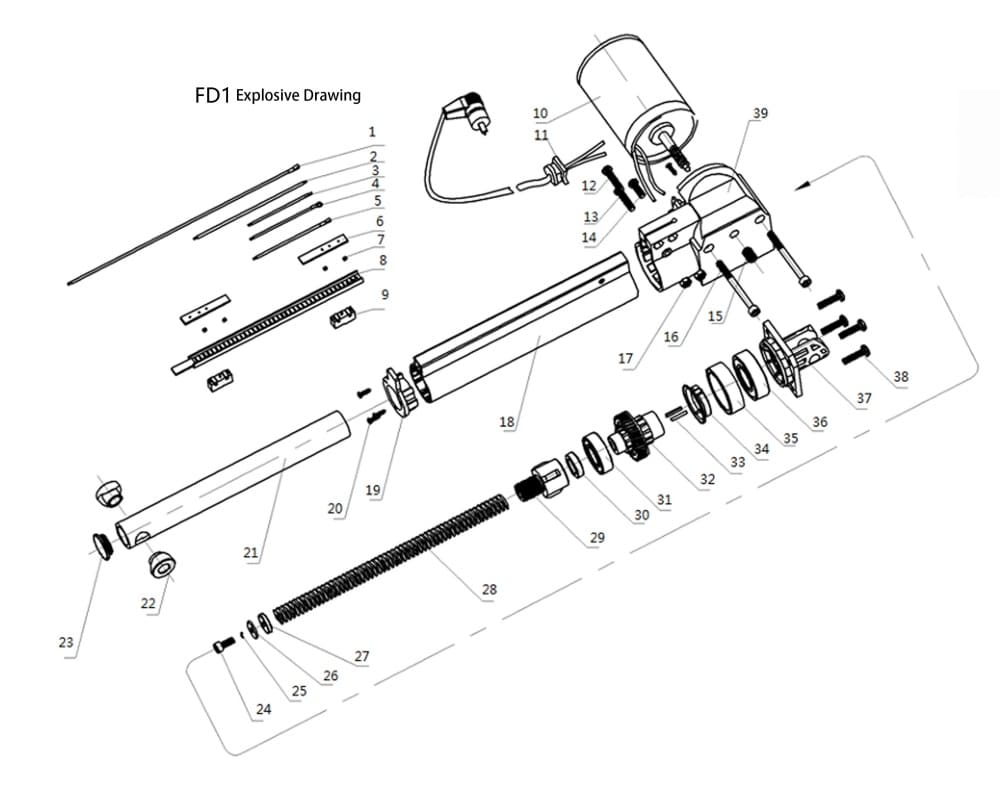
To deeply understand What Is a Linear Actuator, it is necessary to break down its standard internal assemblies. A typical linear actuator consists of a drive motor, gear reduction set, lead screw or ball screw, telescopic inner and outer tubes, limit switches, and mounting brackets. Each part cooperates closely to convert rotational force into linear thrust. When researching What Is a Linear Actuator, many buyers focus only on thrust and stroke parameters, ignoring how these components affect the service life and stability of the whole unit.
The motor serves as the power source for the linear actuator. DC motors are the most common option for small and medium models, while AC motors are used for heavy-load industrial equipment. The gearbox reduces the high-speed rotation of the motor and amplifies the output torque, which directly decides the maximum pushing force of the actuator. The screw assembly is the key conversion part: trapezoidal screws are low-cost and self-locking, and ball screws offer smoother movement and longer service life. If you are still wondering What Is a Linear Actuator, you can remember this core logic: motor rotation → gear deceleration → screw drive → linear push/pull motion.
FD10 compact linear actuator adopts trapezoidal screw design, which features reliable self-locking performance and is suitable for light and medium load automation scenarios. It is a cost-effective model for users who are learning What Is a Linear Actuator and testing prototype equipment.
How a Linear Actuator Converts Rotary Motion to Linear Motion
After you answer What Is a Linear Actuator, the next critical question is how it realizes linear movement. The working flow follows a fixed cycle. When power is supplied to the motor, the motor shaft spins at high speed. The gear reducer slows the rotation speed and boosts torque. The rotating screw then pushes the nut fixed on the inner tube to move axially forward or backward. The inner tube stretches out to generate pushing force or retracts to create pulling force. Limit switches are installed at both ends of the stroke to cut off power automatically when the inner tube reaches the preset position, preventing mechanical damage from overtravel.
Different screw types bring obvious differences in operating experience. Trapezoidal screw linear actuators have higher friction, lower efficiency, but excellent self-locking ability, which can maintain position without continuous power supply. Ball screw linear actuators use rolling balls between the screw and nut to reduce friction, delivering quieter operation, faster speed and longer cycle life. When suppliers introduce product parameters to customers who ask What Is a Linear Actuator, they usually distinguish these two screw types as core classification standards.
Common Types When Learning What Is a Linear Actuator
When you explore What Is a Linear Actuator, you will find multiple classification standards in the industry. According to power sources, linear actuators can be divided into DC linear actuators, AC linear actuators, stepper linear actuators and servo linear actuators. According to transmission structures, they are split into trapezoidal screw actuators, ball screw actuators, belt-driven linear actuators and hydraulic/pneumatic linear actuators. Electric linear actuators are the most popular category in modern automation because they are easy to control, clean and require little maintenance compared with hydraulic and pneumatic solutions.
FD25 IP66 waterproof linear actuator is a metal-structured electric linear actuator, which is a typical representative of heavy-duty and waterproof models. It is often recommended to engineers who just learn What Is a Linear Actuator and need products for harsh working environments.
Hydraulic and pneumatic linear actuators can output extremely large thrust, but they need supporting oil pumps or air compressors, with complex pipelines and leakage risks. Therefore, most small and medium automated equipment prefers electric linear actuators. If you are sorting out component selection schemes, the first step is to confirm What Is a Linear Actuator type that matches your load, speed and environmental requirements.
Key Performance Parameters of a Linear Actuator
Once you clearly understand What Is a Linear Actuator, you need to master the core technical indicators to select the right model. The most important parameters include rated thrust, stroke length, moving speed, rated voltage, duty cycle, protection rating and self-locking performance. Rated thrust refers to the maximum continuous pushing force the actuator can output. Stroke means the total telescopic distance of the inner tube. Duty cycle indicates the allowable continuous working time to avoid motor overheating.
What Is a Linear Actuator: Main Type Parameter Comparison
表格
| Type | Thrust Range | Speed | Self-locking | Noise | Typical Application |
|---|---|---|---|---|---|
| Trapezoidal Screw Electric Linear Actuator | 50N – 3000N | Slow | ✅ Yes | Low | Smart furniture, small automation, FD10 |
| Ball Screw Electric Linear Actuator | 100N – 2500N | Medium | ❌ Optional brake needed | Very Low | Medical equipment, precision positioning |
| Hydraulic Linear Actuator | 1000N – 50000N | Slow | ✅ Yes | High | Heavy industrial machinery |
| Pneumatic Linear Actuator | 200N – 10000N | Fast | ❌ No | High | Assembly line, quick clamping |
This clear comparison table helps you quickly differentiate different models once you fully understand What Is a Linear Actuator. You can filter suitable linear actuator types according to your load, speed and environmental budget requirements.
Many procurement engineers make mistakes at the early stage because they only focus on thrust value without checking the duty cycle and IP rating. For example, equipment working in dusty or wet workshops needs IP65 or higher waterproof and dustproof actuators, while indoor office automation equipment can use ordinary non-waterproof models. When communicating with manufacturers, you can start from confirming What Is a Linear Actuator parameter that is the priority for your project.
Main Application Scenarios of Linear Actuators
After mastering What Is a Linear Actuator, you will find this component widely used in dozens of industries. In industrial automation, linear actuators are used for material sorting, lifting platforms, clamping fixtures and valve control. In smart furniture, they drive height-adjustable desks, electric recliners and cabinet lifting structures. In medical equipment, precision linear actuators power hospital beds, rehabilitation training devices and surgical auxiliary frames. In agricultural machinery, they control baffle adjustment and seeding mechanisms.
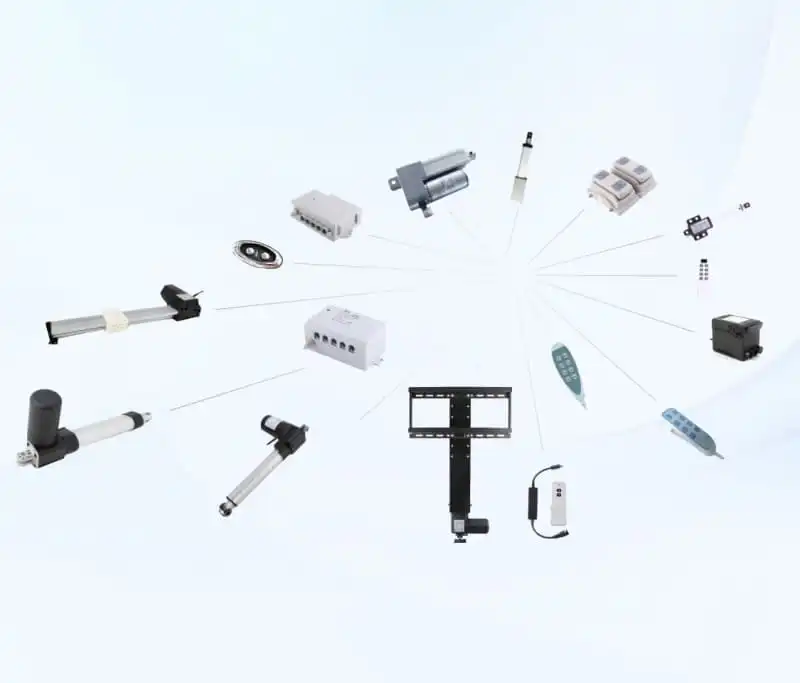
Full series FD linear actuators cover multiple specifications of thrust and stroke, serving industrial automation, medical equipment and smart furniture customers globally. For new buyers who are still figuring out What Is a Linear Actuator, the FD series provides rich sample testing options.
In addition, linear actuators are also applied in automotive modification, aerospace testing, solar tracking systems and packaging machinery. Almost any scenario that needs stable, controllable straight push and pull movement can adopt a linear actuator. As more automated equipment is developed, the market demand grows steadily, and more designers begin to learn What Is a Linear Actuator and its matching methods.
Advantages and Limitations of Electric Linear Actuators
To fully evaluate whether a linear actuator fits your design, after learning What Is a Linear Actuator, you should know its pros and cons. The main advantages of electric linear actuators include simple installation, convenient electronic control, low noise, high positioning accuracy, no oil or air leakage pollution, and low daily maintenance cost. They can be connected with PLC, controllers and sensors to realize automatic closed-loop control easily.
The limitations are also obvious. High-thrust electric linear actuators will have larger volume and higher cost. Under extreme heavy load conditions, hydraulic actuators still have better cost performance. Continuous high-frequency operation beyond the rated duty cycle will cause the motor to overheat and shorten service life. When you confirm What Is a Linear Actuator and prepare to place orders, you need to evaluate the working condition comprehensively instead of only looking at the nominal parameters on the datasheet.
Frequently Asked Basic Questions About Linear Actuators
A large number of basic questions come from users who are first researching What Is a Linear Actuator. A common question is whether a linear actuator can stop at any position during movement. Electric models equipped with position feedback sensors can realize arbitrary positioning, while basic limit-switch versions can only stop at the two end points of the stroke. Another frequent question is whether the actuator can keep its position after power off: trapezoidal screw models have self-locking capability, while ball screw types usually need an electromagnetic brake to hold the position.
Many users also confuse linear actuators with linear modules. Linear modules are complete sliding platforms with guide rails, while a linear actuator is a standalone telescopic push-pull component. Distinguishing these two concepts is a necessary step after you learn What Is a Linear Actuator.
ISO 10218-1:2011 industrial robot safety standard sets general safety requirements for motion components including linear actuators, which can be referenced for equipment compliance design.
FAQ
Q1: What load and stroke do I need to confirm before ordering a linear actuator?
A1: : Confirm working thrust, effective stroke, operating speed and voltage first.
Q2: Is self-locking required for my linear actuator application?
A2: Trapezoidal screw models support built-in self-locking by default.
Q3: Can a linear actuator work continuously for long hours?
A3: It depends on the rated duty cycle of the selected model.
Q4: Is waterproof treatment necessary for my working environment?
A4: Choose IP-rated actuators if the site has water splash or dust.
Q5: Can I customize the mounting bracket and connector of the linear actuator?
A5: Custom brackets and connectors are available for bulk orders.