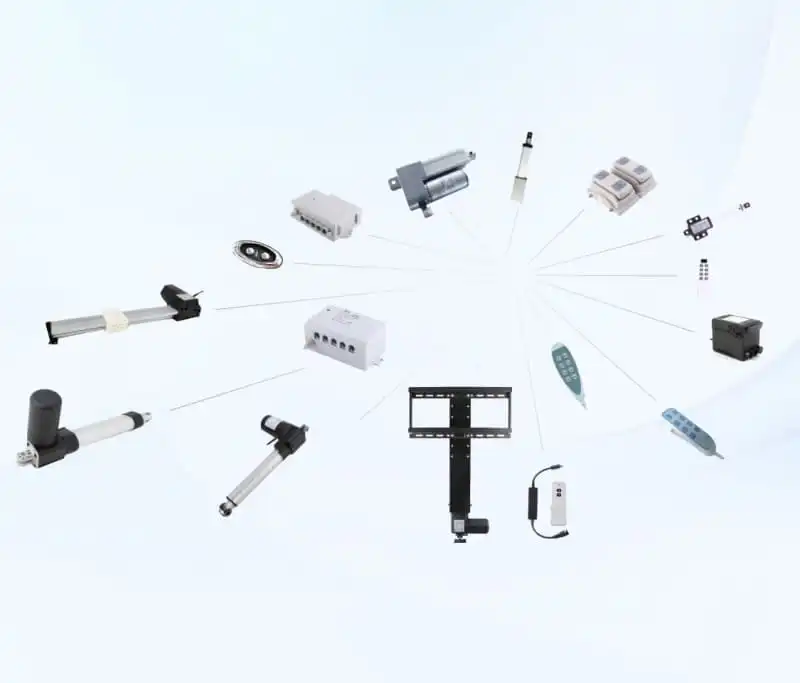
If you are designing automated motion equipment and frequently encounter unstable actuator operation, you must master how to choose a qualified Linear Actuator Power Supply. A matched Linear Actuator Power Supply is the core guarantee for long-term stable operation of all electric linear actuators. Many engineering failures, including insufficient thrust, jitter, startup failure and motor burnout, are not caused by actuator quality problems, but by mismatched Power Supply parameters. Understanding every selection rule of Linear Actuator Power Supply will help you eliminate 70% of daily equipment faults.
Whether you are using miniature, compact, standard or heavy-duty linear actuators, the priority of project debugging is to verify the rationality of the Power Supply. A professional Linear Actuator Power Supply can stabilize voltage and current output, protect the actuator motor and internal transmission structure, and greatly extend the service life of mechanical equipment. This complete Power Supply selection guide systematically sorts out voltage standards, power calculation formulas, safety margins and scenario matching skills for all users.
| 💡Core Selection Conclusion: A standard Linear Actuator Power Supply must follow three basic principles: complete voltage matching, sufficient current power margin, and environmental protection grade adaptation. No matter how excellent the linear actuator performance is, mismatched Linear Actuator Power Supply will lead to continuous failure and hidden safety hazards. |
1. Why Linear Actuator Power Supply Matching Is Critical
The working state of a linear actuator is completely dependent on the support of a stable Power Supply. The internal DC motor and control circuit of the actuator have strict requirements on input voltage and current. When the Power Supply output is unstable or the power is insufficient, the actuator will generate instantaneous current surge during startup and load operation, resulting in jitter, stalling and insufficient thrust.
In actual engineering applications, most users only pay attention to the thrust and stroke parameters of linear actuators but ignore the matching of Actuator Power Supply. This wrong selection habit leads to frequent equipment maintenance, increased after-sales costs and shortened equipment service life. Therefore, mastering standardized Actuator Power Supply selection methods is a necessary skill for every automation designer and procurement engineer.
2. Universal Voltage Standard for Linear Actuator Power Supply
At present, 95% of civilian, commercial and light industrial electric linear actuators on the market adopt two universal DC low-voltage specifications, forming a fixed industry standard for Linear Actuator Power Supply. Different voltage Actuator Power Supply corresponds to different load capacities and application scenarios, with clear hierarchical boundaries.
| Linear Actuator Power Supply Type | Core Features | Applicable Actuator Model | Typical Application Scenarios | Safety & Performance Advantages |
| 12V DC Power Supply | Low voltage, low power consumption, high safety, small current output | All Sanxing linear actuators | Smart furniture, household adjustable equipment, miniature precision instruments, small beauty devices | Zero electric shock risk for human contact, energy-saving operation, stable output for light-load frequent startup |
| 24V DC Power Supply | Stable high current output, strong load driving capability, sufficient power reserve | All Sanxing linear actuators | Medical nursing equipment, industrial automation machinery, outdoor waterproof actuators, agricultural intelligent equipment | Supports long-term continuous heavy-load operation, effectively avoids voltage drop and current shortage under dynamic load |
The 12V Power Supply is mainly oriented to light-load and low-power scenarios, with the greatest advantage of ultra-high safety, which is very suitable for household and civilian equipment that requires frequent human contact. The 24V Power Supply is an industrial universal specification, which can cope with complex working conditions such as heavy load, frequent startup and long-time operation, and is the most widely used Linear Actuator Power Supply in industrial automation projects.
All our Sanxing linear actuators both support 12V and 24V Power Supply switching adaptation. Users can select the corresponding Linear Actuator Power Supply according to the actual load and working environment to ensure the best operating performance of the equipment. Proper power matching is critical for stable operation, as outlined in research covering energy-efficient actuation systems and power matching principles. A properly sized Power Supply avoids voltage sag and overload damage for long-term actuator service life.
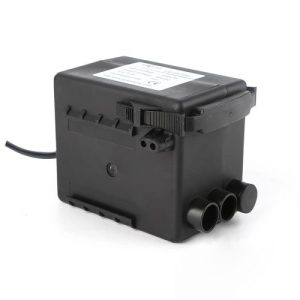
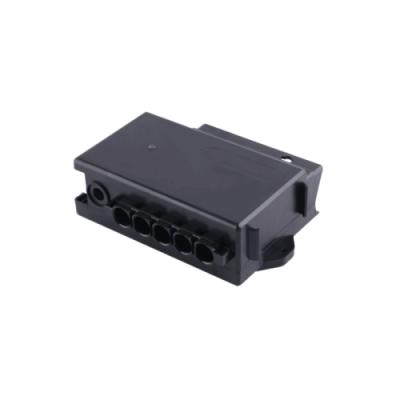
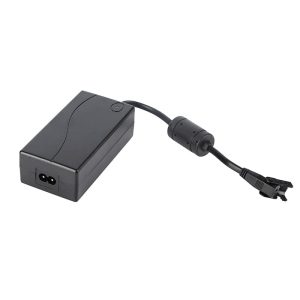
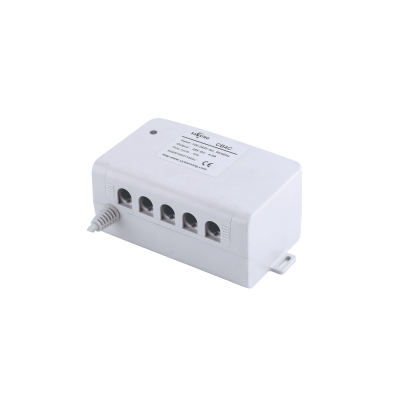
At present we have three types of power supply / control box, generally the same function as transformer, which could change 110~240VAC to 12/24VDC. Please check the following pictures for a reference:
3. Core Calculation Rules for Linear Actuator Power Supply
Simply matching the voltage of the Power Supply is far from enough. Current and power margin calculation is the core step to avoid dynamic power shortage. The linear actuator will generate instantaneous current surge during startup and heavy-load operation. If the Linear Actuator Power Supply lacks sufficient power margin, it will directly cause unstable operation.
| Power Margin Key Rule: The maximum output power of the Actuator Power Supply must be 1.2 to 1.5 times the maximum operating power of the linear actuator. This industry unified standard can completely solve jitter and startup failure caused by insufficient instantaneous power. |
3.1 Standard Power Calculation Formula
To select a precise Actuator Power Supply, you need to calculate the matching power parameters through professional formulas:
- Power Calculation Formula: Power (W) = Voltage (V) × Current (A)
- Actuator Power Supply Margin: Actual Matched Power = Actuator Maximum Power × 1.2~1.5
- Multi-Actuator Synchronous Operation: Total Actuator Power Supply Power = Sum of Single Actuator Power × 1.5 Safety Margin
3.2 Common Calculation Mistakes to Avoid
Many users only calculate the no-load power of the linear actuator when selecting the Linear Actuator Power Supply, ignoring the maximum power generated by heavy-load operation. This calculation error will lead to insufficient power reserve of the Actuator Power Supply. Once the actuator enters the load working state, the voltage will drop instantaneously, resulting in insufficient thrust and abnormal operation.
4. Classification and Application of Linear Actuator Power Supply
According to different usage scenarios and power supply modes, Actuator Power Supply can be divided into adapter power supply, switching power supply and battery backup power supply. Each Actuator Power Supply has its exclusive applicable environment and functional advantages.
4.1 Adapter Linear Actuator Power Supply
The adapter Actuator Power Supply is the most common civilian power supply scheme, with compact size, simple wiring and low cost. It is suitable for single small-power linear actuator equipment such as smart furniture and small medical devices. The adapter Linear Actuator Power Supply is plug-and-play, no complicated wiring debugging, and very friendly for civilian intelligent equipment.
4.2 Switching Linear Actuator Power Supply
The switching Actuator Power Supply has high power stability and strong anti-interference ability, which is specially designed for industrial scenarios. It can support multiple linear actuators to operate synchronously for a long time, with low heat generation and high conversion efficiency. It is the preferred Actuator Power Supply for industrial automation production lines and medium and large mechanical equipment.
4.3 Battery Backup Linear Actuator Power Supply
The battery backup Power Supply is an emergency power supply solution for high-reliability scenarios such as medical equipment and outdoor mobile devices. When the main power supply is cut off, the battery Power Supply can automatically switch on to drive the actuator to complete reset and lowering actions, ensuring equipment and personnel safety. For field operation equipment without fixed power supply, the portable battery Linear Actuator Power Supply can completely solve the power supply dilemma.
5. Environmental Matching Rules for Linear Actuator Power Supply
The protection grade of Actuator Power Supply must match the working environment of the linear actuator. If the actuator is used in humid, dusty or splashing water scenarios with IP66/IP68 protection grade, the ordinary open Actuator Power Supply cannot be used. It is necessary to select a waterproof and dustproof sealed Actuator Power Supply to avoid short circuit and power failure.
- Indoor Dry Environment: Ordinary adapter Actuator Power Supply can meet the demand, low cost and easy maintenance
- Humid & Dust Environment: Must use sealed waterproof Actuator Power Supply to prevent circuit corrosion and short circuit
- Long-Term Continuous Operation: High-power switching Actuator Power Supply with good heat dissipation performance is required
6. Common Faults Caused by Unmatched Linear Actuator Power Supply
Most common faults of linear actuators are directly related to unreasonable Actuator Power Supply configuration. Summarizing these fault phenomena can help users quickly troubleshoot and optimize Actuator Power Supply selection schemes.
| Fault Summary Reminder: More than 80% of linear actuator operating failures come from mismatched Linear Actuator Power Supply. Standardizing power supply selection can greatly reduce equipment failure rate. |
- Actuator Jitter and Unstable Operation: The Actuator Power Supply has insufficient current margin, unable to provide instantaneous power support for heavy-load startup
- Insufficient Thrust and Slow Speed: The Linear Actuator Power Supply voltage is insufficient or the power conversion efficiency is low, resulting in incomplete motor power output
- Motor Overheating and Short Service Life: Long-term overload operation of the Linear Actuator Power Supply causes unstable current output and increased motor operating load
- Power Failure and Sudden Stop: The Linear Actuator Power Supply has poor heat dissipation, automatic power-off protection after high temperature, or poor environmental protection grade leading to circuit failure
- Asynchronous Operation of Multiple Actuators: The total power of the Linear Actuator Power Supply is insufficient, resulting in inconsistent power output of each actuator
7. Linear Actuator Power Supply Selection Step-by-Step Guide
To help users quickly select a suitable Linear Actuator Power Supply, we summarize the standardized one-stop selection process, which can be directly applied to all linear actuator project design work.
- Confirm Actuator Voltage Specification: Check the actuator nameplate parameter to confirm 12V or 24V, ensure the Linear Actuator Power Supply voltage is completely consistent
- Calculate Maximum Operating Power: Calculate the maximum power according to the actuator rated current and voltage, and reserve 1.2~1.5 times power margin
- Select Power Supply Type: Choose adapter, switching or battery Linear Actuator Power Supply according to single/multiple equipment and working scenarios
- Match Environmental Protection Grade: Select waterproof, dustproof or ordinary Linear Actuator Power Supply according to the on-site working environment
- Verify Synchronous Load Capacity: For multi-actuator synchronous systems, calculate the total superimposed power and confirm the Linear Actuator Power Supply load range
8. Article Summary
A stable and matched Linear Actuator Power Supply is the basic guarantee for the efficient and stable operation of all electric linear actuators. When selecting a Linear Actuator Power Supply, users must strictly follow voltage matching, power margin reservation and environmental adaptation rules, and avoid blind selection only based on price and appearance. Scientific Linear Actuator Power Supply configuration can maximize the operating performance of linear actuators, reduce failure rate and extend equipment service life, bringing long-term stable benefits for automation project operation.
FAQ Section
Q1: What is the most commonly used Linear Actuator Power Supply voltage?
A1: 12V DC and 24V DC are the two universal standard voltages for Linear Actuator Power Supply, covering almost all civilian and industrial electric linear actuator scenarios.
Q2: How to calculate the required power of Linear Actuator Power Supply?
A2: Calculate the maximum operating power of the linear actuator through voltage and current, and reserve 1.2-1.5 times power margin to select the matched Linear Actuator Power Supply.
Q3: Can one Linear Actuator Power Supply drive multiple linear actuators?
A3: Yes, but it is necessary to calculate the total superimposed current and power of all actuators and reserve sufficient margin to avoid overload of the Linear Actuator Power Supply.
Q4: Is battery backup Linear Actuator Power Supply necessary for medical equipment?
A4: It is essential. The battery Linear Actuator Power Supply can support emergency reset and lowering of actuators when the main power is cut off, ensuring medical equipment safety.
Q5: Why does the linear actuator jitter after replacing the Linear Actuator Power Supply?
A5: It is usually caused by insufficient current margin or unstable voltage output of the new Linear Actuator Power Supply. Replacing a high-stability power supply can solve the problem.