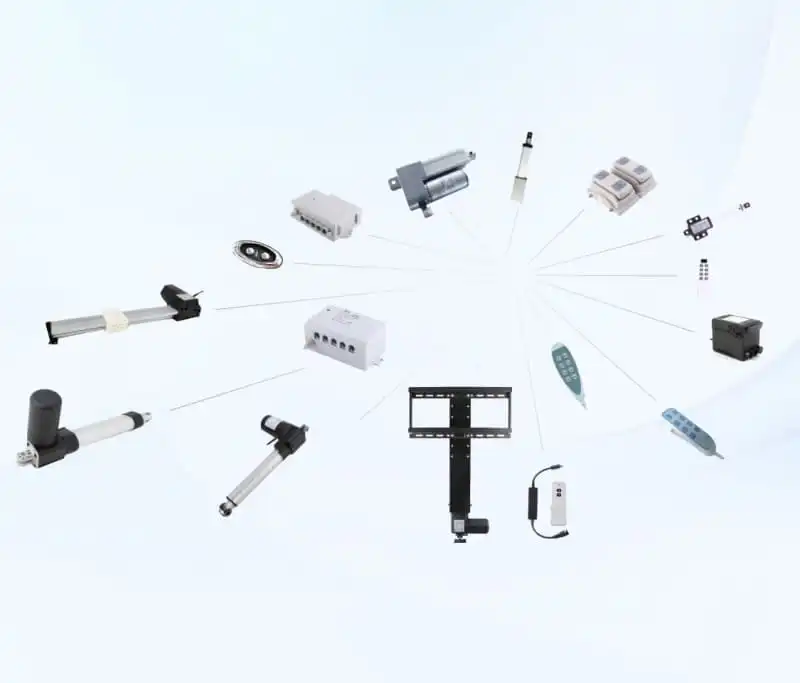
As the core linear motion component of modern intelligent equipment, Linear Actuator Applications cover almost all industrial automation fields. From light-duty precision positioning to heavy-duty mechanical propulsion reaching 8000N thrust, diversified Linear Actuator Applications provide stable and accurate linear motion solutions for automated production, intelligent manufacturing and equipment upgrading. In the process of industrial automation upgrading, Linear Actuator Applications are becoming more diversified and refined, driving the transformation from traditional manual operation to fully automatic intelligent production.
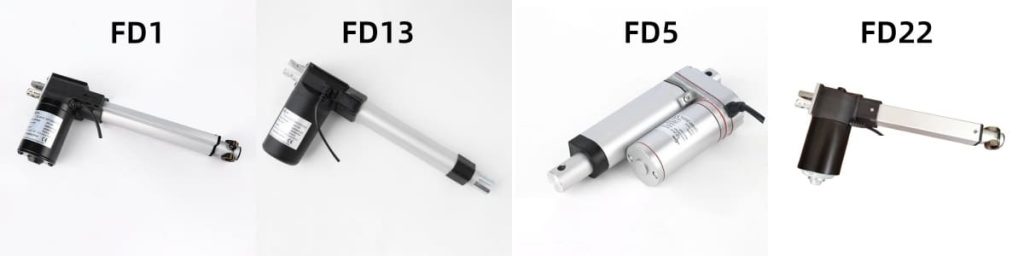
Understanding professional Linear Actuator Applications and scenario-based selection standards can help automation designers and project engineers match the most suitable actuator products for different equipment, maximize equipment operation efficiency, and realize intelligent and automated mechanical motion control. This article comprehensively sorts out core Linear Actuator Applications in industrial automation, analyzes scenario characteristics and selection skills one by one, and introduces the heavy-duty industrial actuator product line covering FD1, FD13, FD5 and FD22 series to help engineers complete accurate product matching.
Core Application Conclusion: Diversified Linear Actuator Applications adapt to all linear motion demands in industrial automation. Light-load precise scenarios adopt compact DC actuators, medium-heavy load scenarios adopt FD5 and FD22 series, and ultra-heavy industrial scenarios requiring 3000N to 8000N thrust adopt FD1 and FD13 high-thrust stable models to meet different industrial needs.
1. Overview of Linear Actuator Applications in Industrial Automation
Industrial automation is the core application field of linear actuators, and all automated equipment that needs linear push-pull, lifting, positioning and telescopic actions rely on Linear Actuator Applications. Compared with traditional hydraulic and pneumatic motion components, electric linear actuators have the advantages of simple control, low noise, high precision and environmental protection, making Linear Actuator Applications more and more popular in modern intelligent factories. The global industrial automation market continues to grow, and the demand for electric linear motion components is increasing at a compound annual growth rate of over 7%, reflecting the irreplaceable position of Linear Actuator Applications in industrial upgrading.
The continuous upgrading of industrial automation equipment has promoted the continuous expansion of Linear Actuator Applications. From single mechanical action to multi-axis synchronous intelligent control, Linear Actuator Applications have realized full coverage from small precision equipment to large industrial production lines, becoming an indispensable core component of industrial intelligent manufacturing. In heavy industrial fields such as metallurgy, mining, construction and agricultural machinery, the demand for high-thrust linear actuators exceeding 3000N is particularly strong, and the FD1 series with maximum 8000N thrust has become the preferred solution for replacing hydraulic cylinders in many heavy-duty applications.
The development trend of industrial automation toward intelligence, networking and precision has put forward higher requirements for Linear Actuator Applications. Modern industrial actuators need to support PLC control, fieldbus communication, position feedback and synchronous operation functions. The FD1, FD13, FD5 and FD22 series all support synchronous operation as an optional function, which can meet the multi-axis linkage requirements of automated production lines and large lifting equipment. At the same time, the built-in limit switch ensures safe operation at both ends of the stroke, and the IP66 protection level of FD1 and FD13 enables stable operation in harsh industrial environments with dust and splashing.
For more information about industrial automation standards and best practices, engineers can refer to the International Society of Automation (ISA), the world’s leading professional association for automation professionals, which provides comprehensive technical resources, standards and certification programs for industrial automation systems.
2. Core Linear Actuator Applications in Industrial Automation Scenarios
2.1 Automated Production Line Transmission & Positioning
Production line sorting, positioning, clamping and transmission are the most extensive Linear Actuator Applications in industrial automation. Linear actuators are installed on assembly lines to realize automatic clamping of workpieces, precise positioning of processing stations and automatic sorting of materials. The stable telescopic motion of actuators replaces manual operation, improving production efficiency and processing accuracy. In automotive assembly lines, electronic product manufacturing lines and food packaging lines, linear actuators undertake key actions such as workpiece pushing, fixture clamping and station switching, ensuring the rhythm and accuracy of automated production.
This type of Linear Actuator Applications requires stable medium thrust and frequent start-stop operation. The FD5 compact linear actuator is widely used in production line auxiliary equipment, with maximum 1500N thrust, compact structure and minimum installation distance of only stroke + 105mm, fully adapting to the space-constrained installation environment of production line equipment. The FD5 series also features an extended operating temperature range of -25°C to +65°C and a 15% duty cycle (3 minutes working + 17 minutes resting), making it suitable for continuous operation requirements in production line environments. For production line stations requiring higher thrust, the FD13 series with up to 6000N thrust can be selected to handle heavy workpiece clamping and positioning tasks.
In intelligent manufacturing systems, production line Linear Actuator Applications are increasingly integrated with vision systems, sensors and PLC controllers to form closed-loop automatic control. The actuator receives position commands from the PLC, completes precise telescopic motion, and feeds back the in-position signal through the built-in limit switch, realizing fully automatic production without human intervention. This application mode has become the standard configuration of modern intelligent factories, and the demand for high-reliability industrial linear actuators continues to grow.
2.2 Industrial Lifting & Handling Equipment
Automated lifting platforms, material handling equipment and mechanical lifting arms are important Linear Actuator Applications. Linear actuators provide stable vertical thrust to realize automatic lifting and height adjustment of equipment, replacing cumbersome hydraulic lifting systems. Electric actuators have simple structure and convenient control, making lifting equipment more intelligent and miniaturized. In warehouse logistics, three-dimensional parking equipment, stage lifting systems and medical operating tables, electric linear actuators have become the core driving components, providing safe and stable lifting motion.
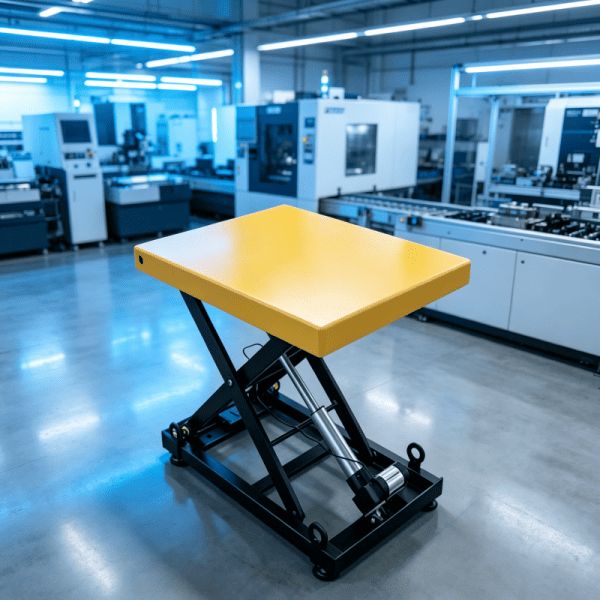
For medium-load lifting scenarios, matched 24V high-power linear actuators are selected to ensure sufficient thrust margin, which is the standard matching scheme for such Linear Actuator Applications. The FD22 series provides up to 6000N maximum thrust with stroke range from 30mm to 500mm, specifically designed for short-stroke heavy-load lifting applications. Its compact structure and stable performance make it ideal for lifting platforms, scissor lifts and height adjustment mechanisms in industrial equipment. For lifting applications requiring longer strokes up to 1000mm, the FD13 series with 6000N maximum thrust and stroke range 30mm to 1000mm is the preferred choice, providing stable vertical lifting force for large-format lifting equipment.
In ultra-heavy lifting scenarios such as construction machinery, mining equipment and large industrial lifting platforms, the FD1 series with maximum 8000N thrust provides the strongest driving force in the product line. With a maximum push force of 8000N and maximum pull force of 6000N, the FD1 series can replace traditional hydraulic cylinders in many heavy-duty lifting applications, offering the advantages of cleaner operation, simpler maintenance and more precise position control. The FD1 series supports stroke customization from 30mm to 1000mm and features IP66 protection, ensuring reliable operation in harsh industrial lifting environments.
The synchronous operation function of these heavy-duty actuators is particularly important for lifting applications. When two or four actuators are used to drive a large lifting platform simultaneously, the synchronous function ensures consistent lifting speed and position across all actuators, preventing platform tilting and ensuring operational safety. Both FD1 and FD13 series support synchronous operation as an optional configuration, making them suitable for multi-point synchronous lifting systems.
2.3 Intelligent Valve & Pipeline Control
In industrial fluid transmission systems, linear actuators are used for automatic opening and closing control of pipelines and valves, which is a key safety-oriented Linear Actuator Applications. The actuator drives the valve core to telescopically adjust the pipeline flow and switch the pipeline state, realizing remote automatic control without manual operation. In water treatment systems, chemical processing, petroleum pipelines and HVAC systems, electric linear actuators provide precise valve control, ensuring the stability and safety of fluid transmission systems. Compared with traditional pneumatic valve actuators, electric linear actuators offer higher positioning accuracy, lower energy consumption and simpler installation without the need for compressed air pipelines.
This kind of Linear Actuator Applications requires high stability and self-locking performance. Trapezoidal screw linear actuators with built-in self-locking function are preferred to ensure that the valve position is stable after power off and avoid pipeline safety hazards. The FD1, FD13, FD5 and FD22 series all adopt trapezoidal screw transmission design with inherent self-locking capability, ensuring that the actuator maintains its position after power failure without additional braking devices. This self-locking feature is critical for valve control applications, where unexpected valve movement could lead to system pressure changes, fluid leakage or even safety accidents.
For valve control applications in corrosive or humid environments, the IP66 protection level of FD1 and FD13 series provides reliable dust and water ingress protection, ensuring long-term stable operation of valve actuators in water treatment plants, chemical factories and outdoor pipeline systems. The built-in limit switches precisely control the fully open and fully closed positions of the valve, preventing over-travel damage to valve components. For large-diameter industrial valves requiring high thrust to overcome fluid pressure, the FD1 series with up to 8000N thrust can provide sufficient driving force for valve operation, replacing traditional large-size pneumatic or hydraulic valve actuators.
2.4 Outdoor Industrial & Agricultural Automation Equipment
Outdoor industrial equipment, agricultural intelligent machinery and environmental protection equipment are special Linear Actuator Applications with high environmental adaptability requirements. Such working environments are humid, dusty and exposed to extreme temperatures, requiring actuators to have waterproof, dustproof and wide-temperature performance. In agricultural machinery such as automatic seeding equipment, fertilizer spreaders, greenhouse ventilation systems and livestock farming equipment, linear actuators provide automatic adjustment of mechanical mechanisms, reducing manual labor and improving agricultural production efficiency. In outdoor industrial equipment such as solar tracking systems, satellite dish positioning and outdoor advertising mechanisms, linear actuators provide reliable all-weather operation.
The FD13 series with IP66 protection rating are specially designed for outdoor industrial Linear Actuator Applications, with excellent waterproof and corrosion resistance, adapting to harsh outdoor working conditions such as agricultural machinery, outdoor monitoring equipment and environmental protection facilities. The IP66 rating means the actuators are fully protected against dust ingress and can withstand powerful water jets from any direction, making them suitable for use in rain, snow and high-humidity outdoor environments. Both series operate within a temperature range of -20°C to +40°C, covering most outdoor industrial and agricultural application scenarios.
For outdoor applications requiring wider temperature tolerance, the FD5 series offers an extended operating temperature range of -25°C to +65°C, making it suitable for extreme climate environments such as cold northern regions or high-temperature desert areas. With IP54 protection and up to 1500N thrust, the FD5 series provides a compact and reliable solution for outdoor precision positioning applications such as solar panel tracking and small agricultural equipment adjustment.
In agricultural automation, the trend toward smart farming has significantly increased the demand for electric linear actuators. Greenhouse ventilation systems use actuators to automatically open and close roof windows based on temperature and humidity sensor data, creating an optimal growing environment for crops. Livestock farming equipment uses actuators to adjust feeding troughs, water dispensers and cage systems, improving animal welfare and feeding efficiency. The low-noise operation (≤48dB) of these industrial actuators is particularly important in livestock environments, where excessive noise can cause stress to animals.
2.5 Precision Industrial Testing Equipment
Precision testing, detection and experimental equipment belong to high-precision Linear Actuator Applications. Linear actuators provide accurate linear displacement to assist equipment in product detection, performance testing and experimental data collection. Such Linear Actuator Applications require low noise, stable speed and high positioning accuracy. In material testing machines, coordinate measuring machines, optical testing equipment and semiconductor manufacturing equipment, linear actuators provide precise sample positioning, probe movement and mechanism adjustment, ensuring the accuracy and repeatability of test results.
The FD5 compact low-noise linear actuator is widely used in precision testing Linear Actuator Applications, with smooth operation, small error and minimum installation distance of only stroke + 105mm, meeting the high-precision motion control needs of testing equipment. With a full load speed range from 3.5mm/s to 30mm/s across different thrust configurations, the FD5 series provides flexible speed options for various precision testing requirements. The 15% duty cycle allows for longer continuous operation periods compared to standard 10% duty cycle actuators, which is beneficial for testing equipment that requires extended continuous operation during test cycles.
For precision testing applications requiring higher thrust to apply controlled force to test samples, the FD13 series provides up to 6000N thrust with stable speed performance and IP66 protection, suitable for material strength testing machines and heavy-duty test fixtures. The built-in limit switches ensure precise stroke positioning, and the optional synchronous operation function enables multi-axis coordinated motion in complex testing systems. All series feature noise levels ≤48dB, ensuring a quiet testing environment that does not interfere with acoustic measurements or operator comfort.
In semiconductor and electronics manufacturing, precision Linear Actuator Applications require extremely clean operation without particulate emissions. The fully enclosed structure of electric linear actuators prevents lubricant leakage and particle generation, making them suitable for cleanroom environments where hydraulic or pneumatic systems may introduce contamination. The compact design of the FD5 series is particularly advantageous in space-constrained semiconductor equipment, where every millimeter of installation space is critical.
2.6 Heavy Industrial Machinery & Construction Equipment
Heavy industrial machinery, construction equipment and mining machinery represent the most demanding Linear Actuator Applications, requiring ultra-high thrust, robust construction and reliable operation under extreme load conditions. In construction machinery such as concrete pumps, crane outriggers, scaffolding systems and formwork adjustment mechanisms, linear actuators provide powerful linear driving force to replace traditional hydraulic cylinders. In mining equipment such as conveyor belt tensioning systems, ore gate control and ventilation adjustment, high-thrust actuators ensure continuous operation in dusty and vibrating environments. In metallurgical equipment, steel mill machinery and heavy manufacturing systems, linear actuators provide precise control of heavy mechanisms with thrust requirements ranging from 3000N to over 8000N.
The FD1 series is the flagship heavy-duty solution for these extreme Linear Actuator Applications, delivering a maximum push force of 8000N and maximum pull force of 6000N, making it one of the most powerful electric linear actuators in its class. With stroke customization from 30mm to 1000mm, IP66 protection rating and robust construction using aluminum alloy, zinc alloy and iron materials, the FD1 series is engineered to withstand the harsh conditions of heavy industrial environments. The 10% duty cycle (2 minutes working + 18 minutes resting) is standard for heavy-duty actuators, and proper duty cycle management ensures long service life even under continuous heavy load operation.
For heavy industrial applications requiring a balance of high thrust and compact installation, the FD13 series provides up to 6000N maximum thrust with a minimum installation distance of stroke + 160mm, offering slightly more compact dimensions than the FD1 series while still delivering industrial-grade thrust performance. The FD13 series shares the same IP66 protection, -20°C to +40°C operating temperature range and ≤48dB noise level as the FD1 series, providing a versatile option for heavy-duty applications where installation space is limited but thrust requirements remain high.
The FD22 series is specifically designed for short-stroke heavy-load Linear Actuator Applications, with maximum 6000N thrust and stroke range from 30mm to 500mm. Its unique mechanical structure with side-mounted motor provides a compact form factor ideal for applications such as machine tool adjustment, fixture clamping and short-stroke lifting mechanisms where space is constrained but high thrust is required. With IP44 protection and the same robust material construction, the FD22 series offers reliable performance in indoor industrial environments.
3. Industrial Heavy-Duty Linear Actuator Product Line Overview
3.1 FD1 Series: Flagship 8000N Ultra-Heavy-Duty Actuator
The FD1 series is the top-of-the-line heavy-duty industrial linear actuator in the product lineup, designed for the most demanding Linear Actuator Applications requiring ultra-high thrust. With a maximum push force of 8000N and maximum pull force of 6000N, the FD1 series can replace hydraulic cylinders in many heavy industrial applications, offering the advantages of electric drive including precise control, clean operation, simple maintenance and easy integration with PLC and automation systems.
Key Specifications of FD1 Series:
- Input Voltage: 12V/24VDC
- Max. Load in Push: 8000N / 6000N / 5000N / 3000N / 2000N (multiple configurations)
- Max. Load in Pull: 6000N / 5000N / 4000N / 2500N / 1500N
- No Load Speed: 4.5 / 6 / 8 / 13 / 22 mm/s
- Full Load Speed: 3 / 4 / 5.5 / 9 / 16 mm/s
- Stroke Length: 30mm ~ 1000mm (customizable)
- Min. Installation Distance: Stroke + 165mm
- Operating Temperature: -20°C ~ +40°C
- Limit Switch: Built-in, factory preset
- Duty Cycle: 10% (2 minutes working, 18 minutes resting)
- Noise Level: ≤48dB
- Protection Rating: IP44
- Certificate: CE
- Optional Function: Synchronization
The FD1 series is ideal for heavy industrial machinery, construction equipment, large lifting platforms, mining equipment and any Linear Actuator Applications requiring thrust exceeding 5000N. Its robust construction and IP66 protection ensure reliable operation in harsh environments with dust, moisture and mechanical vibration.
3.2 FD13 Series: 6000N Industrial-Grade High-Thrust Actuator
The FD13 series is a versatile industrial-grade linear actuator designed for medium-to-heavy Linear Actuator Applications requiring high thrust with compact dimensions. With maximum push force of 6000N and maximum pull force of 4000N, the FD13 series covers the broad middle range of industrial thrust requirements, making it the most widely used model in heavy industrial automation.
Key Specifications of FD13 Series:
- Input Voltage: 12V/24VDC
- Max. Load in Push: 6000N / 4000N / 3000N / 1500N / 500N
- Max. Load in Pull: 4000N / 3000N / 2000N / 1000N / 300N
- No Load Speed: 5 / 6.5 / 10 / 20 / 35 mm/s
- Full Load Speed: 3.5 / 4.5 / 7 / 12.5 / 26 mm/s
- Stroke Length: 30mm ~ 1000mm (customizable)
- Min. Installation Distance: Stroke + 160mm
- Operating Temperature: -20°C ~ +40°C
- Limit Switch: Built-in, factory preset
- Duty Cycle: 10% (2 minutes working, 18 minutes resting)
- Noise Level: ≤48dB
- Protection Rating: IP66
- Certificate: CE
- Optional Function: Synchronization
The FD13 series is suitable for automated production line clamping, industrial lifting equipment, valve control, outdoor agricultural machinery and a wide range of other industrial Linear Actuator Applications. Its IP66 protection and wide speed range make it adaptable to both indoor and outdoor industrial environments.
3.3 FD22 Series: 6000N Short-Stroke Compact Heavy-Duty Actuator
The FD22 series is a specially designed short-stroke heavy-duty linear actuator for Linear Actuator Applications where installation space is limited but high thrust is required. With a unique side-mounted motor configuration and maximum 6000N push force, the FD22 series provides powerful thrust in a compact form factor, ideal for machine tool adjustment, fixture clamping and short-stroke lifting mechanisms.
Key Specifications of FD22 Series:
- Input Voltage: 12VDC/24VDC
- Max. Load in Push: 6000N / 3000N / 2000N / 1500N
- Max. Load in Pull: 4000N / 2000N / 1500N / 1000N
- No Load Speed: 4 / 8 / 12 / 16 mm/s
- Full Load Speed: 3 / 5.5 / 10 / 11 mm/s
- Stroke Length: 30mm ~ 500mm (customizable)
- Min. Installation Distance: Stroke + 160mm
- Operating Temperature: -20°C ~ +40°C
- Limit Switch: Built-in, factory preset
- Duty Cycle: 10% (2 minutes working, 18 minutes resting)
- Noise Level: ≤48dB
- Protection Rating: IP44
- Certificate: CE
- Optional Function: Synchronization
The FD22 series is particularly suitable for indoor industrial Linear Actuator Applications such as machine tool workpiece clamping, assembly line fixture adjustment, packaging equipment sealing mechanisms and short-stroke lifting platforms where the compact side-motor design provides installation advantages over conventional inline motor actuators.
3.4 FD5 Series: 1500N Compact Wide-Temperature Industrial Actuator
The FD5 series is a compact and versatile industrial linear actuator designed for Light-to-medium Linear Actuator Applications requiring precision, wide temperature tolerance and compact installation. With maximum 1500N push force, extended -25°C to +65°C operating temperature range and 15% duty cycle, the FD5 series offers enhanced performance for demanding precision industrial applications.
Key Specifications of FD5 Series:
- Input Voltage: 12V/24VDC
- Max. Load in Push: 1500N / 1000N / 700N / 400N / 300N / 200N
- Max. Load in Pull: 1000N / 800N / 500N / 300N / 200N / 100N
- No Load Speed: 5 / 8 / 14 / 25 / 27 / 35 mm/s
- Full Load Speed: 3.5 / 5 / 8.5 / 16 / 25 / 30 mm/s
- Stroke Length: 25mm ~ 1000mm (customizable)
- Min. Installation Distance: Stroke + 105mm
- Operating Temperature: -25°C ~ +65°C
- Limit Switch: Built-in, factory preset
- Duty Cycle: 15% (3 minutes working, 17 minutes resting)
- Protection Rating: IP54
- Certificate: CE
- Optional Function: Synchronization
The FD5 series is ideal for precision testing equipment, production line positioning, small lifting mechanisms, outdoor solar tracking systems and any Linear Actuator Applications requiring compact installation, wide temperature operation and longer continuous duty cycles. Its minimum installation distance of only stroke + 105mm makes it the most compact option in the heavy-duty product line, suitable for space-constrained industrial equipment.
4. Linear Actuator Applications Industry Matching Comparison Table
This table sorts out the matching relationship between different industrial scenarios, application characteristics and recommended actuator models, providing direct reference for Linear Actuator Applications selection.
| Industrial Application Scenario | Application Characteristics | Recommended Actuator Model | Core Selection Standard |
|---|---|---|---|
| Heavy Industrial Machinery & Construction | Ultra-high thrust 5000N+, harsh environment, robust construction | FD1 Series (up to 8000N) | Maximum thrust, heavy-duty build |
| Production Line Sorting & Clamping | Frequent start-stop, medium load, stable operation, compact space | FD5 Series / FD13 Series | Low noise, stable thrust, compact size |
| Industrial Lifting & Handling | Medium-heavy load, long stroke, synchronous operation required | FD13 Series / FD1 Series | Sufficient thrust margin, sync function, stable load-bearing |
| Short-Stroke Heavy Load Fixture | High thrust, limited installation space, indoor environment | FD22 Series (up to 6000N) | Compact side-motor design, high thrust, short stroke |
| Outdoor & Agricultural Automation | Humid & dusty environment, waterproof required, wide temperature | FD13 Series | IP66 waterproof, corrosion resistance, -20°C~+40°C |
| Valve & Pipeline Control | Self-locking required, stable position, safety critical | FD13 Series / FD1 Series | Trapezoidal screw self-locking, built-in limit switches |
| Precision Testing Equipment | High precision, low noise, micro displacement, wide temperature | FD5 Series | Smooth operation, accurate positioning, -25°C~+65°C, 15% duty |
| Extreme Temperature Outdoor | Cold or hot climate, outdoor exposure, medium thrust | FD5 Series | Extended temperature range -25°C~+65°C, IP54 |
With this comprehensive matching table, automation engineers can quickly identify the most suitable actuator model for their specific Linear Actuator Applications, ensuring optimal performance, reliability and cost-effectiveness. The FD1, FD13, FD5 and FD22 series together cover the full spectrum of industrial thrust requirements from 200N to 8000N, providing a complete product solution for all industrial automation scenarios.
5. Advantages of Linear Actuator Applications in Industrial Automation
5.1 High Automation & Intelligent Compatibility
Linear Actuator Applications can be perfectly compatible with PLC controllers, sensors and remote control systems, realizing automatic, intelligent and remote motion control. It can be embedded into various intelligent industrial equipment to complete precise and standardized mechanical actions, greatly improving the automation level of production lines. The built-in limit switches provide reliable position feedback signals that can be directly interfaced with PLC digital inputs, forming closed-loop control systems without additional position sensors. The optional synchronous operation function enables multi-axis coordinated motion control, which is essential for large lifting platforms, gantry systems and multi-point positioning mechanisms in modern automated factories.
In Industry 4.0 smart factory environments, Linear Actuator Applications are increasingly integrated with Industrial Internet of Things (IIoT) systems, where actuator operation data such as runtime, cycle count and fault status can be monitored remotely for predictive maintenance and production optimization. The simple electrical interface of DC linear actuators makes integration with modern automation systems straightforward, requiring only basic power and control signals compared to the complex hydraulic and pneumatic infrastructure needed by alternative motion technologies.
5.2 Low Operation Cost & High Stability
Compared with hydraulic and pneumatic systems, Linear Actuator Applications have no oil leakage and air leakage risks, no complex pipeline layout, low daily maintenance cost and long service life. The electric drive mode operates stably with low failure rate, which can continuously create stable production benefits for industrial automation projects. Hydraulic systems require regular oil changes, filter replacements and sealing component maintenance, and are prone to oil leaks that can contaminate production environments and create safety hazards. Pneumatic systems require continuous compressed air supply, which is energy-intensive and prone to air leaks that reduce system efficiency over time.
Electric linear actuators, by contrast, require minimal maintenance beyond periodic lubrication of the screw and gear assembly (depending on the model and application). The fully enclosed construction protects internal components from dust and moisture, and the absence of fluid media eliminates the risk of environmental contamination. This makes Linear Actuator Applications particularly advantageous in clean manufacturing environments such as food processing, pharmaceutical production and electronics manufacturing, where hydraulic oil leakage or compressed air contamination could compromise product quality and regulatory compliance.
The total cost of ownership (TCO) of electric linear actuator systems is typically lower than equivalent hydraulic or pneumatic systems over the equipment lifecycle, when considering installation costs, energy consumption, maintenance expenses and downtime. The simple two-wire control of DC actuators eliminates the need for complex valve islands, pressure regulators and fluid distribution networks, reducing both initial installation costs and ongoing maintenance complexity.
5.3 Strong Scenario Adaptability
Diversified linear actuator models cover light, medium and heavy-load scenarios, adapting to indoor clean environment and outdoor harsh environment. The flexible and changeable Linear Actuator Applications can meet the personalized motion control needs of different industrial equipment, with extremely high scene adaptability. The FD1 and FD13 series with IP66 protection can operate in dusty, wet and outdoor environments, while the FD5 series with extended -25°C to +65°C temperature range can function in extreme climate conditions. The FD22 series with compact side-motor design fits into space-constrained installations where conventional actuators cannot be accommodated.
This scenario adaptability extends to stroke length customization, with all four series supporting customizable stroke lengths to meet the specific dimensional requirements of different equipment. The FD1, FD13 and FD5 series support strokes from 30mm (25mm for FD5) up to 1000mm, while the FD22 series covers 30mm to 500mm for short-stroke applications. This wide range of stroke options, combined with multiple thrust configurations within each series, allows engineers to select an actuator that precisely matches their application requirements without over-specifying or under-specifying the motion component.
The low noise operation (≤48dB across all heavy-duty series) further enhances scenario adaptability, making Linear Actuator Applications suitable for noise-sensitive environments such as medical equipment, office automation, indoor agricultural facilities and residential applications where excessive noise would be unacceptable. The smooth and quiet operation of electric linear actuators contributes to improved workplace safety and operator comfort in industrial environments.
6. Selection Tips for Linear Actuator Applications
Selecting the right linear actuator for industrial Linear Actuator Applications requires careful consideration of multiple technical parameters and application requirements. The following selection tips provide a systematic approach to help automation engineers and equipment designers make informed decisions.
6.1 Determine Thrust Requirements with Safety Margin
The first and most critical parameter for Linear Actuator Applications selection is the required thrust or force. Engineers must calculate the actual load force required by the application, including the weight of the moving load, friction forces, acceleration forces and any additional dynamic loads. Once the actual required force is determined, a safety margin of at least 30% to 50% should be added to ensure reliable operation under all conditions. For example, if an application requires 4000N of thrust, an actuator with a rated thrust of 6000N or more should be selected to provide adequate safety margin.
When selecting between the FD1 (up to 8000N), FD13 (up to 6000N), FD22 (up to 6000N) and FD5 (up to 1500N) series, the thrust requirement is the primary determining factor. For applications requiring more than 5000N continuous thrust, the FD1 series is the appropriate choice. For applications requiring 1500N to 5000N thrust, the FD13 or FD22 series should be considered based on stroke and installation requirements. For applications requiring less than 1500N thrust with precision and compact installation, the FD5 series is the optimal selection.
6.2 Match Stroke Length to Mechanical Travel Requirements
The stroke length of the linear actuator must match the actual mechanical travel required by the application. It is important to select a stroke that is slightly longer than the minimum required travel to account for installation tolerances and mechanical adjustments. All heavy-duty series support customizable stroke lengths, allowing engineers to specify the exact stroke needed for their equipment. The FD1, FD13 and FD5 series support strokes up to 1000mm, while the FD22 series is limited to 500mm maximum stroke for short-stroke applications.
When calculating stroke requirements, engineers must also consider the minimum installation distance of each actuator model. The minimum installation distance is the fully retracted length of the actuator, which must fit within the available installation space when the actuator is fully retracted. The FD1 series has a minimum installation distance of stroke + 165mm, the FD13 and FD22 series require stroke + 160mm, and the FD5 series is the most compact with stroke + 105mm. This dimension is critical for equipment design, as insufficient installation space is a common cause of actuator selection errors.
6.3 Evaluate Environmental Protection Requirements
The operating environment of Linear Actuator Applications plays a significant role in actuator selection. For indoor industrial environments with normal temperature and humidity, the IP44 protection of the FD22 series may be sufficient. For outdoor applications, dusty environments, wet conditions or equipment subject to water splash, the IP66 protection of the FD1 and FD13 series is essential. For applications in extreme temperature environments, such as cold climate outdoor equipment or high-temperature industrial processes, the FD5 series with extended -25°C to +65°C operating temperature range provides the widest temperature tolerance.
Engineers should also consider the presence of corrosive chemicals, abrasive dust, mechanical vibration and electromagnetic interference in the application environment when selecting an actuator. The robust construction of the heavy-duty series using aluminum alloy, zinc alloy and iron materials provides good resistance to mechanical stress and vibration, while the fully enclosed design protects internal components from environmental contaminants.
6.4 Consider Duty Cycle and Operating Frequency
The duty cycle of the actuator must match the operating frequency requirements of the application. The FD1, FD13 and FD22 series have a standard 10% duty cycle, meaning they can operate continuously for 2 minutes followed by 18 minutes of rest. The FD5 series offers an enhanced 15% duty cycle, allowing 3 minutes of continuous operation followed by 17 minutes of rest. For Linear Actuator Applications requiring more frequent or continuous operation, engineers should either select an actuator with a higher duty cycle rating or implement multiple actuators to share the workload.
It is important to note that operating actuators beyond their rated duty cycle will cause motor overheating, reduced service life and potential thermal protection shutdowns. In production line applications where actuators cycle frequently, proper duty cycle management is essential to prevent unexpected downtime. The built-in thermal protection in these actuators will automatically shut down the motor if overheating occurs, protecting the actuator from damage but potentially disrupting production.
6.5 Verify Control and Synchronization Requirements
For Linear Actuator Applications requiring integration with PLC or industrial control systems, engineers should verify that the actuator’s control interface is compatible with the control system. All heavy-duty series operate on 12V or 24V DC power, which is compatible with most industrial control systems. Simple forward/reverse control can be achieved with a basic relay or H-bridge controller, while more sophisticated position control may require a dedicated actuator controller with position feedback.
For applications requiring multiple actuators to operate in synchronization, such as large lifting platforms or multi-point positioning systems, the optional synchronous operation function available on all four series should be specified. Synchronous actuators are factory-calibrated to ensure consistent speed and position across multiple units, preventing mechanical binding, uneven loading and potential equipment damage. The synchronous function is particularly important for safety-critical lifting applications where platform tilting could create hazardous conditions.
7. Article Summary
Linear Actuator Applications in industrial automation encompass a vast and growing range of use cases, from precision positioning in testing equipment to ultra-heavy-duty propulsion in construction and mining machinery. The FD1, FD13, FD5 and FD22 heavy-duty industrial actuator product line provides comprehensive coverage of thrust requirements from 200N to 8000N, with the FD1 series leading the lineup at 8000N maximum thrust for the most demanding industrial applications. Each series offers distinct advantages in terms of thrust capacity, stroke range, installation dimensions, protection rating and operating temperature, enabling engineers to select the optimal actuator for their specific Linear Actuator Applications.
The advantages of electric linear actuators over traditional hydraulic and pneumatic systems include simpler installation and maintenance, lower total cost of ownership, cleaner operation without fluid leakage risks, higher positioning precision, lower noise and easier integration with modern PLC and IIoT automation systems. These advantages have driven the widespread adoption of Linear Actuator Applications across virtually all industrial sectors, including manufacturing, logistics, agriculture, construction, mining, energy and environmental protection.
By following systematic selection practices including proper thrust calculation with safety margin, accurate stroke and installation dimension matching, appropriate environmental protection rating selection, duty cycle verification and control system compatibility assessment, engineers can ensure reliable, efficient and cost-effective Linear Actuator Applications in their industrial automation projects. The continued advancement of electric linear actuator technology, including higher thrust capacities, improved efficiency, smarter control interfaces and enhanced connectivity, will further expand the scope of Linear Actuator Applications in the era of Industry 4.0 and intelligent manufacturing.
FAQ
Q1: What is the maximum thrust available for industrial Linear Actuator Applications?
A1: The FD1 series offers the highest thrust at 8000N push and 6000N pull, ideal for heavy industrial applications like construction machinery and mining equipment.
Q2: Which actuator series is best for outdoor industrial Linear Actuator Applications?
A: The FD13 series with IP66 protection are recommended for outdoor use, operating within -20°C to +40°C.
Q3: Can multiple linear actuators operate synchronously for lifting applications?
A4: Yes, all four series (FD1, FD13, FD5, FD22) support optional synchronous operation for lifting platforms and multi-point positioning systems
Q4: What is the difference between FD13 and FD22 series for medium-heavy Linear Actuator Applications?
A4: Both offer up to 6000N thrust. FD13 has inline motor, up to 1000mm stroke, IP66; FD22 has compact side motor, up to 500mm stroke, IP44 for indoor use.
Q5: How do I select the correct thrust rating for my Linear Actuator Applications?
A5: Calculate required force (load + friction + acceleration), then add 30-50% safety margin. FD1 covers 2000-8000N, FD13 500-6000N, FD22 1500-6000N, FD5 200-1500N.
Q6: Can linear actuators replace hydraulic cylinders in heavy industrial applications?
A6: Yes, the FD1 series (8000N) can replace hydraulics in many heavy applications, offering cleaner operation, precise control and easier maintenance. Hydraulics may still be needed for continuous high-force operation beyond 10% duty cycle.