
Electric linear actuator converts motor rotary motion into linear reciprocating push-pull movement. It acts as an auxiliary motion unit to realize automatic, centralized or remote control for various equipment.
Many purchasers easily confuse linear actuator with linear actuator driver. The actuator is the mechanical power unit generating push-pull motion, while the driver or controller manages power supply, movement direction and operation logic. Matching a suitable driver is critical for long-term stable operation.
What Is an Electric Linear Actuator
Electric linear actuators are widely used in power equipment, industrial machinery, agricultural machinery, smart furniture, chemical equipment, lifting systems and food processing machinery.
Its obvious advantages include stable performance, smooth operation, low noise, simple installation and competitive cost.
Common Types of Linear Actuators
- Classified by screw structure: Trapezoidal screw actuator, ball screw actuator, planetary ball screw actuator
- Classified by motor type: DC linear actuator, AC linear actuator, stepper linear actuator, servo linear actuator
Working Principle of Linear Actuator
The motor drives reduction gears to transfer power to the screw and nut assembly, converting rotary motion into straight-line movement.
Forward and reverse rotation of the motor controls extension and retraction of the push rod. Combined with levers, rocker arms and connecting rods, the actuator can complete swing and other complex movements. Adjusting the lever arm length can change the effective stroke range. For more background knowledge, you can read about industrial motion control fundamentals.
Key Parameters When Selecting Linear Actuators
- Rated thrust and maximum load
- Working stroke length
- Rated voltage: 12VDC / 24VDC are mainstream options
- Running speed
- Duty cycle
- IP protection level for indoor or outdoor environments
For deeper technical guidance about system performance, please refer to linear actuator system performance considerations.
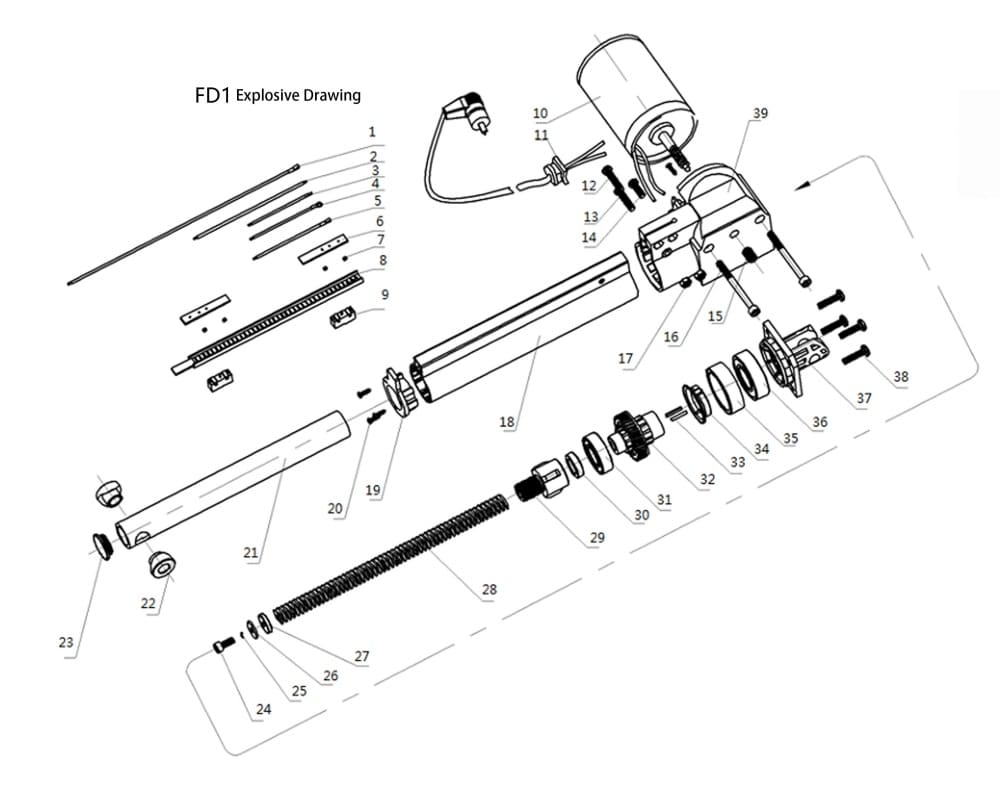
Main Internal Structure
A standard linear actuator consists of drive motor, reduction gear set, screw shaft, nut, guide sleeve, push rod, sliding block, housing, worm gear and built-in limit switches.
As a modern electric drive component, it supports stable reciprocating motion within customized stroke range.
Stroke Control Mechanism
Most mini DC actuators adopt worm and worm gear transmission. The gear drives the worm wheel to rotate and pushes the built-in screw to move axially. The connecting plate drives the limit rod synchronously.
When reaching the preset stroke position, the limit block triggers the micro switch to cut off power automatically. This protection works for both extension and retraction.
Linear Actuator Driver & Optional Control Accessories
A linear actuator cannot achieve flexible control without matched control components. Our optional supporting accessories include:
- Control Box (Driver): Single-channel, dual-channel, three-channel and four-channel driver boxes for synchronous control of multiple actuators.
- Supporting Power Supply: Voltage-matched power units cooperating with control boxes.
- Hand Remote Controller: 2-button, 4-button, 6-button and 8-button wired or wireless controllers for manual operation.
Without a dedicated actuator driver, you can only achieve basic extend and retract by switching power polarity. Synchronized operation, speed regulation and position control require special drivers.
Common Problems Caused by Mismatched Actuator Driver
- Insufficient driver current leads to motor stalling
- Voltage mismatch will damage internal motor parts
- Incompatible limit signal causes mechanical collision
- Continuous operation results in overheating of the driver
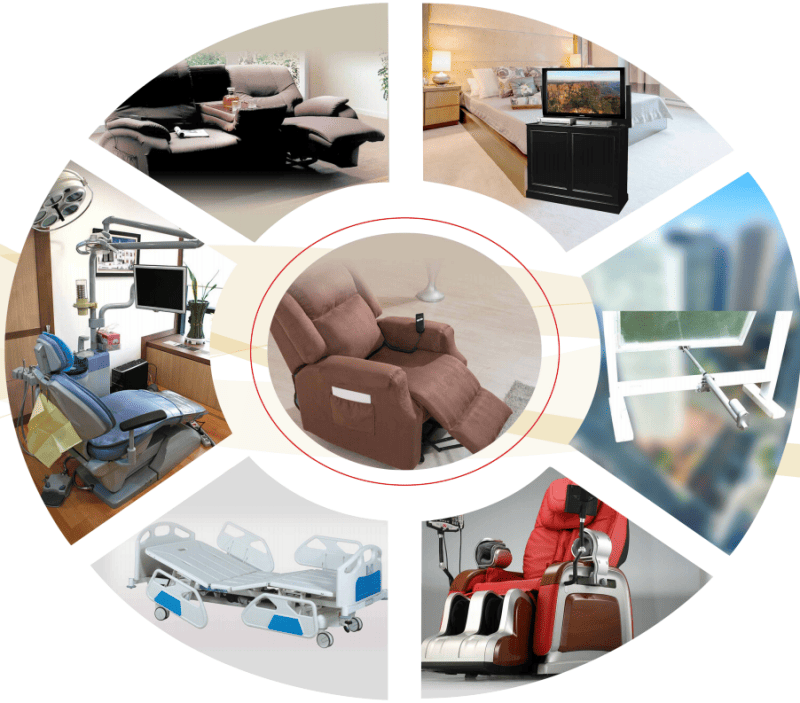
Typical Application Scenarios
Smart furniture, medical equipment, agricultural automation, ventilation skylights, industrial assembly equipment, sanitation machinery and outdoor automation devices.
FAQ
Q1: What factors affect linear actuator running noise?
A1: Operating noise is mainly determined by gear material, motor type, assembly precision and load condition. Plastic‑gear mini actuators deliver quieter operation, while metal‑gear models provide longer service life with relatively higher noise output. Overloading the device will also increase obvious noise during movement
Q2:What is the difference between stroke and thrust of linear actuator?
A2: Stroke refers to the maximum moving distance of the push rod. Thrust means the maximum force the actuator can output. Select stroke according to your mechanical travel requirement and choose thrust with proper safety margin for your actual load.
Q3: Can the stroke of linear actuator be adjusted arbitrarily?
A: The effective stroke is customized during production. Built-in limit switches are preset according to your required stroke.
Q4: Which voltage specifications are available for DC linear actuators?
A: Common versions are 12VDC and 24VDC. Select matched power supply and driver according to actuator voltage.
Q5: Do I need a separate controller for a linear actuator?
A5: Basic simple‑on‑off control can work with direct DC power. If simple, we recommend to buy together with our Sanxing controllers.
Q6: How to extend the service life of electric linear actuators?
A6: Avoid continuous over‑load running, do not exceed rated stroke limit, keep the installation well‑aligned without side force. Choose proper IP rating according to working environment, and do frequent visual inspection for industrial long‑time operation.
Related Reading
You may be interested in our product series: